
I've been thinking about ghosts, not because it's Halloween, but because last weekend I attended an online writing course titled Nature's Ghosts. We worked through a series of exercises designed to make us look at things differently.
The ghosts we were exploring weren't the sort that rattle chains or appear at the end of a dark corridor, but a much quieter kind. The course was about what remains after something or someone has gone: the marks left by things we may know little or nothing about, from fragments of structures that once served a purpose to traces of lives and landscapes that existed long ago.
The prompts made me wonder whether the same is true of the people who disappear from our lives. Their absence becomes part of our own landscape, rather like the remnants of derelict buildings, although it is rarely visible. Instead, it might be found in conversations we once shared, familiar routines that seemed so ordinary at the time, or the small habits we barely realise we've acquired. I've found myself thinking about this more than I might normally have done since losing my dad. I wrote about him after returning from Sri Lanka, and about the final stages of the Pekoe Trail and the way his presence seemed to accompany me, even though he was no longer here. I don't want to repeat that story here but I'm beginning to understand that loss doesn't belong neatly in one piece of writing, or one moment in time. It becomes part of the landscape through which we continue to move, sometimes obvious, sometimes barely noticed, but always influencing who we are.
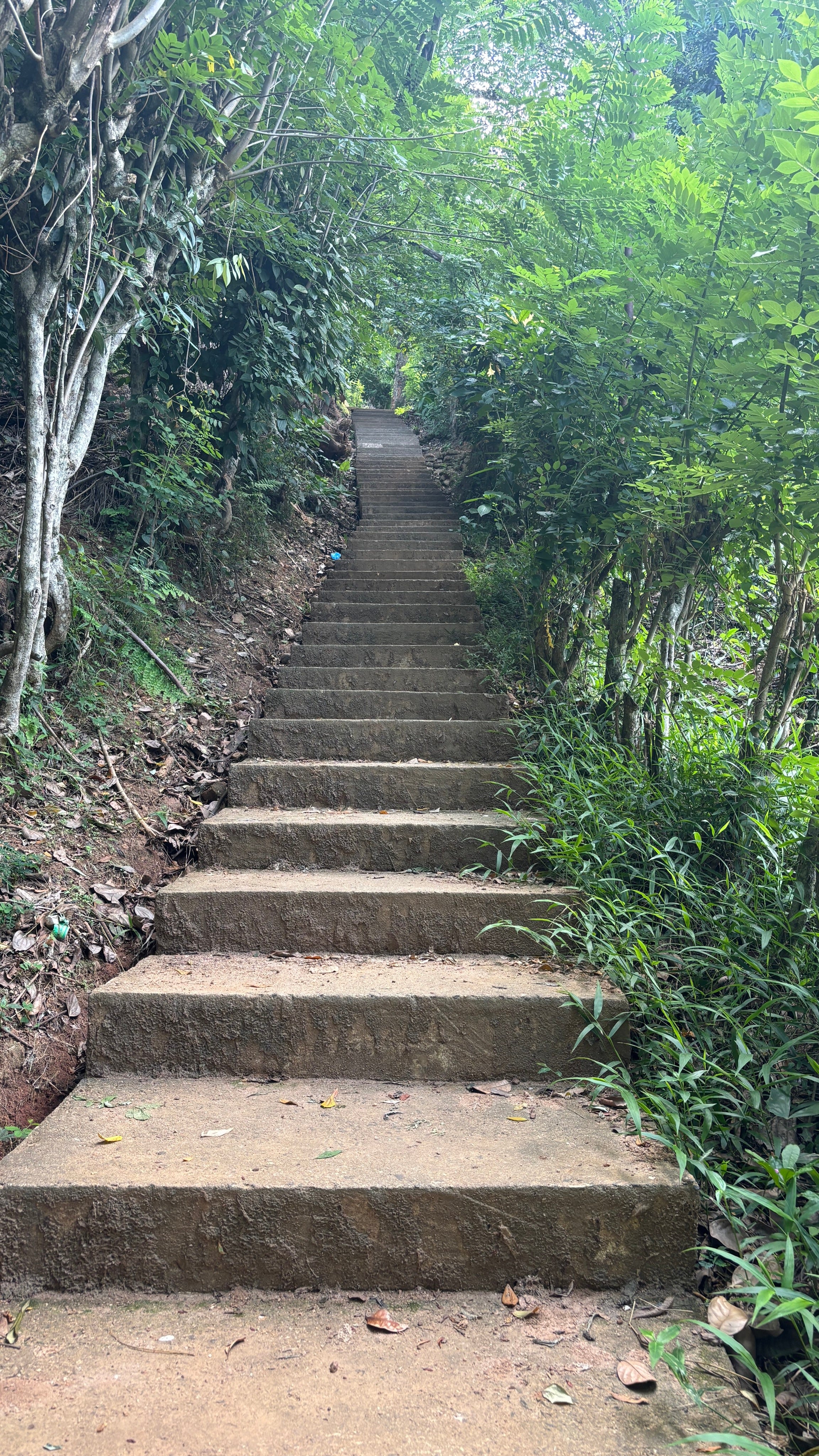
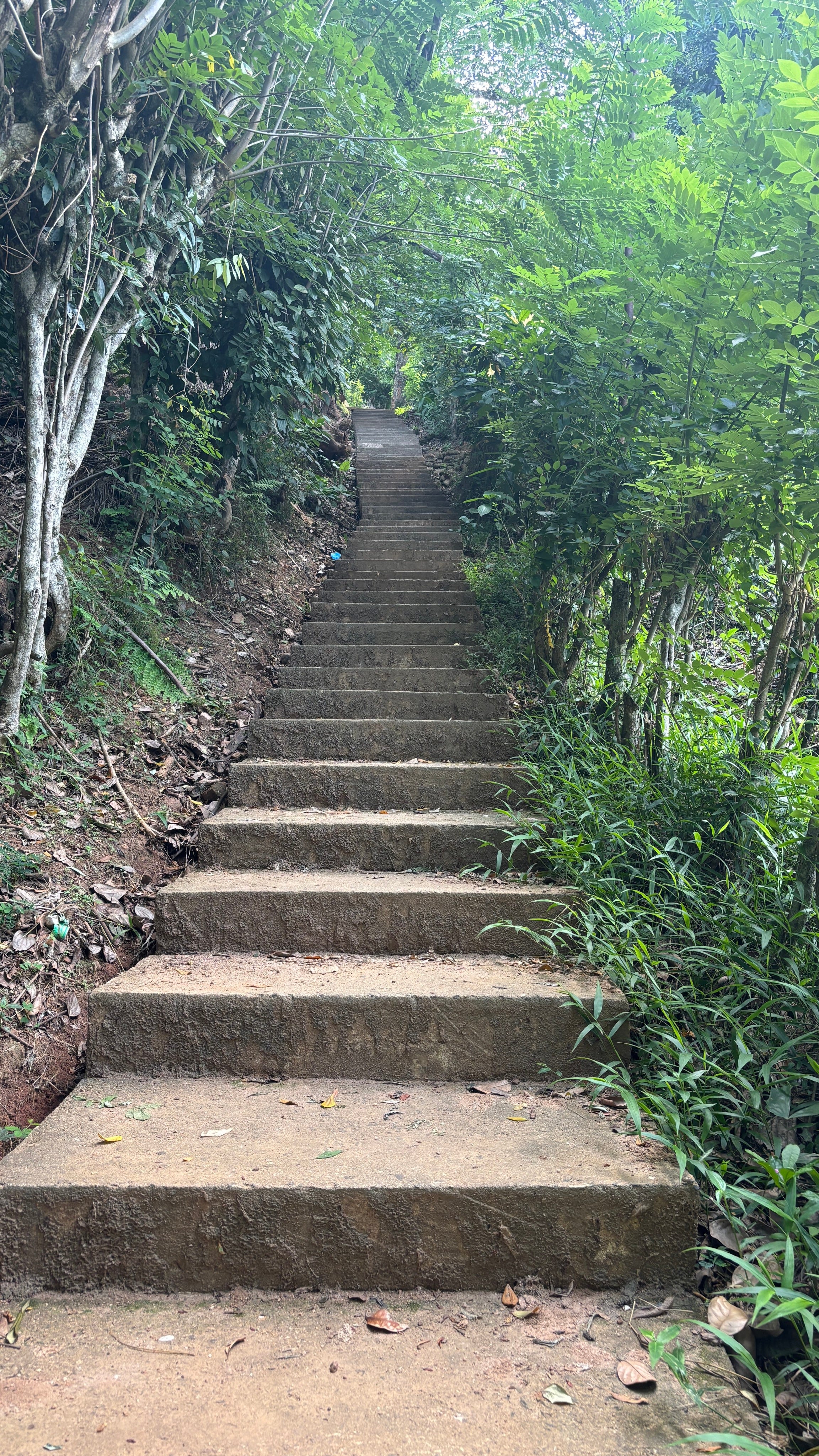
The course exercises also made me notice how much of the world is made up of things that have been left behind, and how easily we pass them by. They took me back to the Pekoe Trail. While trekking 323 kilometres through Sri Lanka's central highlands, I had plenty of time to observe the landscape as I passed through tea plantations, villages and forests. I noticed a fragment of wall beside a path, the remains of a building whose original purpose was no longer obvious, a village that had grown around an old track, and a pathway gradually disappearing beneath overgrown vegetation. Each offered a small glimpse into something that had existed before.
I began to realise that the landscape is rarely quite what it appears to be. It carries the marks of the people who have lived and worked there, and Sri Lanka's hill country is full of layers of history, some obvious, others much harder to find. Perhaps everywhere is like this, if we take the time to look.
There were ghostly creatures, too, although these were harder to spot. A lizard barely distinguishable from its surroundings, or a snake almost completely concealed in the undergrowth. I still remember my fascination at seeing a crested serpent eagle gliding overhead, something I could easily have missed had I not looked up at just the right moment. Of course, the lizard, the snake and the eagle were living presences rather than ghosts, but they reminded me how much exists beyond our immediate awareness. We see only a small part of what surrounds us, whether above us, beneath our feet or right in front of us. We tend to notice what we have learned to recognise, and often simply don't see what we haven't.
The same is true of the past. We see the stones but not the house, the old path but not the people who wore it into the ground. Perhaps we are made up of these traces, too. We carry experiences that have shaped us, habits acquired from people who are no longer in our lives, and phrases we find ourselves repeating without remembering where we first heard them. Places we once knew can remain vivid in our minds long after they've changed beyond recognition. A familiar smell or an unexpected sound can bring something back with startling clarity.
But my thoughts took a slightly different turn when I began to consider another kind of absence: the space between what has been and what is yet to come. This shifted my attention away from looking back and towards what might lie ahead. Many of us are keen to mark things by celebrating beginnings, recording milestones and congratulating ourselves on reaching the end of something. We draw lines on maps, give places names and like to know where we are at any given time, preferably with a clear indication of where we're heading next. I know I do! Yet there are times when life doesn't offer us a marker. This is where I find myself just now. Something has ended, but whatever comes next hasn't quite begun. The familiar shape of life has shifted. Looking backwards, I can see what has changed, but looking forwards offers little more than possibilities. There's no signpost, no defined pathway and no name for the place I’ve found myself in. I've realised that it isn't necessarily a bad place to be. It can be uncomfortable, unsettling even, perhaps because it hasn't yet revealed itself, but that doesn't mean it’s somewhere I need or even want to rush to leave.
Having completed the Pekoe Trail, I know I'll return to Sri Lanka. There are people I want to see, work I want to support and more of the country I want to explore. My next visit is beginning to take shape, but I have no idea yet what the next chapter might bring. And I'm beginning to think that perhaps I don't need to know.
Perhaps this is what has stayed with me most from the writing course, alongside some of the events of recent weeks. Ghosts have come to mean more to me than simply the traces of people and things that have disappeared. They've made me think about how absence and possibility might be two sides of the same coin. A place where something once stood can remind us of what has been lost, but it can also leave space for something new and meaningful to grow.
For the moment, I'm content-ish to leave this place unmarked.